
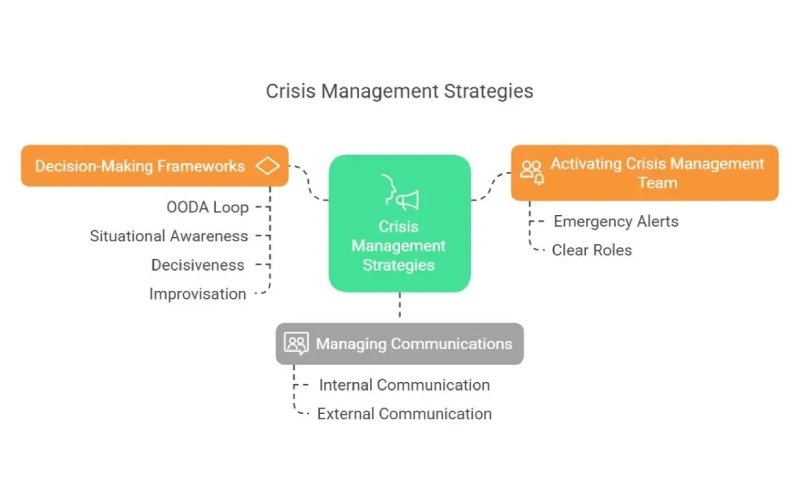
In business, uncertainty parallels decisions. We can’t predict what will happen the next day, such as a temporary closure, safety concerns, technical failure, or anything else. The emergency closure of Sandringham Estate has become a case study in the business field on how established institutions handle uncertainty. Today, we will discuss this case in detail. Keep reading.
Also Read : Starbucks Partner Hours Explained: A Simple Guide to Understanding Your Work Schedule
Why an Emergency Closure Matters in Business
An emergency closure is different from a routine closure. It affects your reputation, public trust, employee relations, supplier relations, customer relations, etc.
An emergency closure may create:
Revenue interruptions
Customer uncertainty
Staff scheduling problems
Delayed partnerships or bookings
Public questions about safety or management
A real leader handles tough situations with grace and ensures minimal loss and returns business to its normal pace as soon as possible.
Lesson 1: Fast Communication Builds Trust
The primary thing your customers expect from you in situations like emergency closure is fast communication. They don’t want to hear rumors from others; they want only the truth from the organization itself.
Organizations that handle disruption well usually:
Release official updates quickly
Explain what has changed
Share expected timelines when possible
In today’s digital world, it is easier than ever to achieve this through online communication.
Lesson 2: Reputation Is Your Safety Net
A strong brand with a loyal customer base can easily handle difficult situations without significantly affecting the business. Institutions like Sandringham Estate have been operating for decades and have gradually built public trust, which has helped them navigate tough situations like this.
A trusted brand helps:
Keep customers patient during delays
Reduce public criticism
Support recovery after disruption
Lesson 3: Diversified Revenue Creates Stability
In today’s time, you can’t depend on one single income stream; diversification is important. As per sources, Sandringham Estate is involved in multiple business activities, including:
Tourism and visitor experiences
Retail and gift operations
Events and hospitality
Estate and agricultural management
It helps them survive without struggling much, even if one or two streams are not working well.
Lesson 4: Leadership Must Be Visible During Crisis
Another important lesson is that leadership must be available and visible during a crisis. Strong leaders stay at the forefront during these types of situations:
Make clear decisions
Provide calm communication
Focus on practical solutions
Accept responsibility when needed
A crisis is the real test of management’s strength. When leadership is visible, teams stay focused.
Lesson 5: Operational Flexibility Reduces Damage
Unexpected closures are often the result of operational weakness. Businesses with flexible systems usually recover faster than others, because of reasons like:
Backup scheduling plans
Emergency contact systems
Supplier alternatives
Digital communication tools
Rigidity kills your business’s chances of survival.
Lesson 6: Customer Experience Does Not Stop During Problems
Many companies dilute their focus on customer service when a crisis hits. However, this is the most crucial time in which customers analyze the real strength of your company.
People notice:
How quickly do they receive updates
Whether refunds or alternatives are offered
How respectfully their concerns are handled
Lesson 7: Risk Planning Is a Business Necessity
Risk planning is not optional; it is a necessity in today’s uncertain times.
It generally include:
Safety procedures
Emergency financial reserves
Insurance coverage
Data backups
Internal communication systems
Businesses that plan well before a crisis hits usually recover earlier than others.
What Entrepreneurs Can Learn
The Sandringham Estate situation is a case study of how businesses should respond to operational uncertainty. The primary lessons include:
Build trust before problems happen
Communicate quickly during a disruption
Diversify income sources
Stay visible as a leader
Prepare for operational risk
These principles are universal and not limited to any industry.
Frequently Asked Questions (FAQs)
Why is Sandringham Estate Relevant to Business Lessons?
Because Sandringham Estate doesn’t focus on a single business, it operates across multiple areas, including tourism, retail, events, estate management, and more.
What is the Biggest Lesson From an Emergency Closure?
You should communicate with your customers and every related party as soon as possible.
Can Small Businesses Apply These Lessons?
Absolutely, these lessons are not limited to any field or business size. Any business can implement and leverage these lessons.
Conclusion
The emergency closure at Sandringham Estate is shocking for many. Still, after closely studying the facts, we can conclude that it was the failure of engaging in multiple businesses without proper planning and diversification. In this article, we discussed multiple business lessons we can learn from the Sandringham Estate case. We hope you found it informative. If so, do share this post with others as well.