
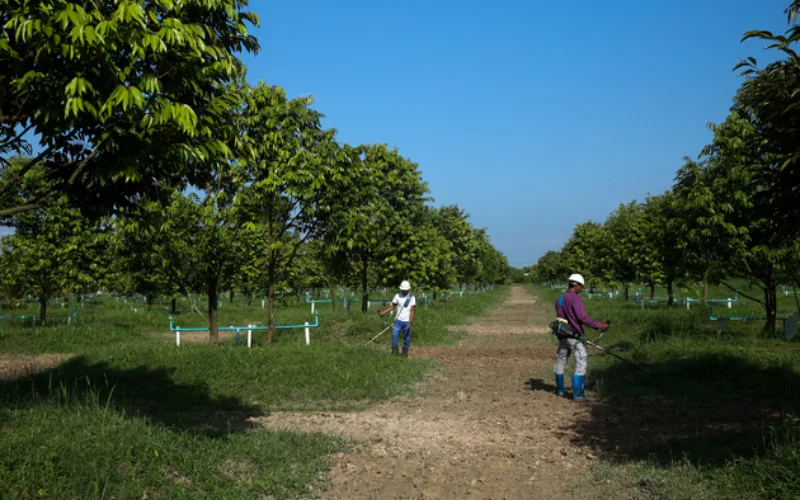
The agriculture sector is growing worldwide, and it holds a significant part of the total economic contribution in several countries, including Myanmar. Myanmar’s agriculture market is diversifying, and one crop that is gaining attention is durian. Its cultivation around Yangon will play a crucial role in the country’s export ambitions. Durian is also known as the “king of fruits” in Southeast Asia.
Also Read : Why You Need a Policy on Monitoring Employee Email and Internet Usage
In this article, we will discuss how durian farming in Yangon is developing, where exports are moving toward, its economic significance, and more, so keep reading.
Durian Cultivation in the Yangon Region
The Yangon region benefits from:
Fertile soil
Warm, humid climate
Access to transport and export infrastructure
These are the ideal conditions to create a suitable environment for durian cultivation. However, its production in Myanmar is not comparable with countries with large production of durian, like Thailand and Malaysia.
Majority orchards near Yangon are small to medium-sized, family-operated, and focused on improving fruit quality instead of prioritizing large-scale volume. To meet export standards, farmers are continuously improving their farming techniques.
Why Yangon Matters for Exports
Yangon is considered Myanmar’s main commercial hub. These factors ensure its importance for durian exports:
Proximity to ports
Cold storage and logistics facilities
Access to export certification offices
Due to favorable factors like these, most durian exports are routed through Yangon.
Export Markets and Demand
Regional demand for durian is continuously rising, especially in:
China
Thailand
Singapore
Other Southeast Asian markets
Myanmar’s durian exports are limited in volume, but they attract buyers because of:
Competitive pricing
Fresh harvest cycles
Expanding regional trade links
Generally, exporters prefer fresh durian. However, the trend of frozen and processed forms of durian is also rising.
Economic Impact on Local Farmers
Exporting durian has a positive impact on farmers’ income. It provides several benefits, and some of them are as follows:
Higher price per fruit
More stable demand through contracts
Opportunities to reinvest in farming improvements
Durian Exports Also Support:
Seasonal employment
Local transport and packaging services
Rural income diversification
To get these benefits, it is important to meet export standards, which are stricter than local ones, which makes exporting tough for all farmers.
Challenges Facing Durian Exports
As we discussed the benefits, here is the list of challenges that farmers and others face:
Quality and Consistency: Consistency in quality, form, and size is important; variability in farming practices makes it difficult to achieve.
Certification and Compliance: For the exporting process, you would require:
Phytosanitary certificates
Proper packaging
Traceability
These steps turn export into a complex process for small farmers.
Logistics and Shelf Life: Durian is a highly perishable fruit, and it requires a proper cold storage system and a timely transport facility.
Competition: Established exporters like Thailand have well-developed supply chains and brand recognition, which is a significant hurdle for Myanmar.
Government and Industry Support
The government is promoting exports in Myanmar and taking steps like:
Farmer training programs
Export facilitation initiatives
Encouragement of value-added processing
These programs and initiatives are playing a significant role in bringing improvement in farming practices and treating durian as a high-potential niche export item.
Future Outlook
The future is full of uncertainties, and we can’t predict it, but as per current practises, we can assume:
Gradual rather than rapid
Quality-driven rather than volume-driven
Focused on regional markets first
If Myanmar farmers continue to improve their cultivation practices and work on developing a better logistic system, then the country can represent itself as a durian supply leader in Southeast Asia.
Frequently Asked Questions (FAQs)
Is Durian Widely Grown In Myanmar?
Durian’s production happens in a few regions, including areas around Yangon. In Myanmar, currently, the production is on a smaller scale compared to some neighboring countries.
Where Does Myanmar Export Durian?
Myanmar mainly exports durian in Asian markets such as China and Southeast Asia.
Why Is Yangon Important For Durian Exports?
Yangon is ideal for durian export because of its logistics facilities, port access, and export certification availability.
Conclusion
The agriculture sector plays a significant role in several countries’ economies. In Myanmar, durian is getting attention as a new export opportunity. This fruit is becoming popular, and its cultivation happens in a few countries only, and amongst them, Myanmar is one of them. However, for exporting, they are required to follow strict rules and maintain consistent quality, which is a big challenge. In this article, we discussed the economic opportunity for Myanmar and other details related to durian. In the end, we hope that you like reading this post and found it informative. If so, then do share this post with others as well.