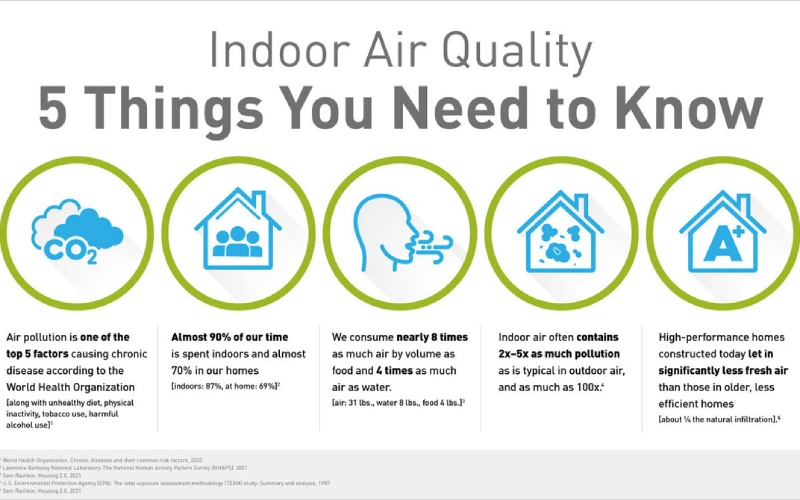
At the time when air pollution is at its peak in Asian countries like India, Pakistan, Bangladesh, and more. Government and independent agencies are issuing guidelines to stay at homes which makes working on improving indoor air quality (IAQ) a safety step everyone needs to take to protect their health.
Also Read : Master Your Move: Packing Tips for Beginners and Professional Help
This article is a practical guide on how you can improve indoor air quality safely. Here, we will discuss practical tips, easy solutions, and more, so keep reading.
Improve Ventilation (Safely)
The first step is to ensure proper ventilation; fresh air is the foundation of clear indoor air.
You can improve ventilation by:
Open windows when outdoor air quality is good.
Use exhaust fans in kitchens and bathrooms.
Install or maintain mechanical ventilation systems (HRV/ERV if possible).
Safety Tip:
Check your local outdoor air quality index (AQI). Avoid opening windows during:
Heavy pollution days
High pollen seasons (if allergic)
Wildfire smoke events
Control Dust And Allergens
Dust is the real evil; it contains pollen, mold spores, pet dander, and microscopic particles.
Here are practical tips to control dust and allergens:
Vacuum weekly using a HEPA-filter vacuum.
Damp mop floors instead of dry sweeping.
Wash bedding weekly in hot water.
Reduce clutter (it collects dust).
What Makes HEPA Filters Crucial?
HEPA filters capture 99.97% of particles as small as 0.3 microns.
Use Air Purifiers Wisely
If used correctly as directed, air purifiers can significantly improve air quality. While selecting an air purifier, don’t forget to check:
True HEPA filter
Activated carbon filter (for odors and VOCs)
Correct room size rating
Avoid These Things:
Ozone-generating purifiers (can irritate lungs)
Ionizers without HEPA filtration
You should install an air purifier in the rooms where you spend the most time.
Maintain Proper Humidity Levels
Most people ignore ensuring a proper humidity level, which directly affects mold growth and respiratory comfort.
Ideal Indoor Humidity:
30% – 50%
If Too High:
Use a dehumidifier
Fix leaks immediately
Improve bathroom/kitchen ventilation
If Too Low:
Use a clean humidifier
Avoid over-humidifying (can promote mold)
Eliminate Indoor Pollutant Sources
Prevention is always better than a cure, and the same thing applies to air cleaning. You must work on reducing indoor pollutant sources. The major ones are as follows:
Cigarette smoke
Incense and candles
Gas stove emissions
Cleaning chemicals
Paint fumes
Solutions:
Avoid indoor smoking entirely
Use low-VOC paints and cleaners
Cook with ventilation on
Store chemicals in sealed containers
Maintain HVAC Systems
The heating and cooling system directly affects air circulation. To improve it, you should take these necessary actions:
Change filters every 1–3 months
Use high-quality MERV 11–13 filters (if compatible)
Schedule annual maintenance
Unlike clean filters, dirty filters recirculate pollutants instead of removing them.
Manage Pet Dander
If you have pets:
Groom them regularly
Keep pets out of bedrooms
Wash pet bedding weekly
Vacuum frequently with a HEPA filter
These are crucial steps to follow, as pet dander is a common trigger for allergies.
Test For Hidden Air Hazards
Not all air problems are easily identifiable. If the above-mentioned tips do not work or do not significantly improve your indoor air quality, it becomes crucial to get these tests done:
Radon (especially in basements)
Mold
Carbon monoxide (install CO detectors)
Formaldehyde (in new furniture or flooring)
Make sure to keep these tests random.
Be Cautious With Indoor Plants
Plants are no substitute for a good quality air purifier. They can slightly improve aesthetics and mood, but they also increase the risk of mold due to overwatering.
Common Mistakes to Avoid
Using scented sprays to “mask” odors
Running humidifiers without cleaning them
Ignoring small leaks
Buying cheap air purifiers without HEPA filters
Burning candles daily in closed rooms
Quick Daily Checklist
Open windows when the air quality is good
Keep humidity between 30–50%
Vacuum weekly
Change HVAC filters regularly
Avoid indoor smoke
Use exhaust fans while cooking
Frequently Asked Questions (FAQs)
What Is The Fastest Way To Improve Indoor Air Quality?
Increasing ventilation and using a HEPA air purifier are amongst the fastest ways to improve indoor air quality.
Do Air Purifiers Really Work?
Yes, they do work, but you need to invest in a good air purifier with a true HEPA filter according to your room size for noticeable results.
How Often Should HVAC Filters Be Changed?
Generally, HVAC filters should be replaced every 1-3 months. Mostly, it depends on the use and filter types.
Conclusion
Improving indoor air quality has become a necessity in today’s toxic environment. Air pollution is directly linked to several deadly diseases. In this guide, we discussed in detail how to improve indoor air quality safely, shared practical tips, easy solutions, things to avoid, and much more. In the end, we hope that you like reading this post and find it informative, so let us know how you are going to improve the indoor air quality of your place.